 FACULTY OF EXACT AND NATURAL SCIENCES
 FACULTY OF HUMANITIES
 FACULTY OF SOCIAL AND POLITICAL SCIENCES
 FACULTY OF PSYCHOLOGY AND EDUCATIONAL SCIENCES
 FACULTY OF ECONOMICS AND BUSINESS
 FACULTY OF MEDICINE
 FACULTY OF LAW




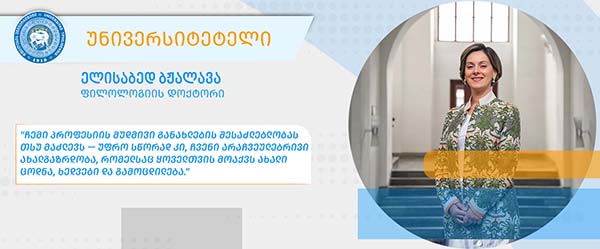 It has been two decades since I graduated from Tbilisi State University, but I have not been away from the university for a minute since then. After being a student, then a visiting lecturer and assistant professor, I am now an associate professor,” - this is how Elisabed Bzhalava, head of the bachelor’s and master’s programs in Turkology at the Faculty of Humanities, describes her relationship with TSU.
Along with her academic activities, Bzhalava has also worked in various administrative positions at the university over the years. She was the head of the Learning Process Management Department, an employee of the Foreign Relations Department, and a scientific secretary of the Dissertation Council. She is currently a member of the University Senate. The young researcher tells us about her relationship with the university.
With Love for “Çalıkuşu”
My professional path in Turkology began with a rather simple, seemingly accidental experience: when I first watched the Turkish TV series “Çalıkuşu” (The Wren), I developed a desire to learn more about the Turkish language and culture. The more I learned, the more my interest and professional motivation grew. Today, I can say with full responsibility that Turkology is more than just a profession to me - it is a lifestyle that allows me to teach, conduct research, discover new things every day, and share all of this with future generations.
In 1995, I enrolled in the Faculty of Oriental Studies at Tbilisi State University, and in 1999, I received a bachelor’s degree, qualifying me to teach Turkish and Georgian languages and literature, as well as to work as a translator. That same year, I began a master's degree program, and by 2001, I had earned a master's degree in philology. In 2001, I enrolled in the postgraduate program at the Faculty of Oriental Studies, where I researched “Root Verbs and Reciprocals in the Turkish Language.”
In my dissertation, based on appropriate theoretical analysis and extensive empirical material, I tried to show and prove that the morphological structure of the Turkish language does not fully align with the framework of a purely agglutinative language. The research presented confirms that Turkish exhibits agglutinative features as well as inflectional elements, which suggests that it is a language of the agglutinative-inflectional type. This approach differs significantly from the traditional view that attributes the Turkish language solely to the agglutinative type, a view that is still widely prevalent in relevant scientific literature.
In 2006, I successfully defended my PhD thesis and was awarded the academic degree of Candidate of Philological Sciences. However, to be honest, my higher education did not end there. In fact, it was then that my daily, continuous learning began, and it continues to this day. The university, or rather our extraordinary youth who bring new knowledge, visions, and experiences, gives me the opportunity to constantly update my profession.
Georgian teacher of Turkish officers
My first international experience began in 2002. At that time, I was studying for my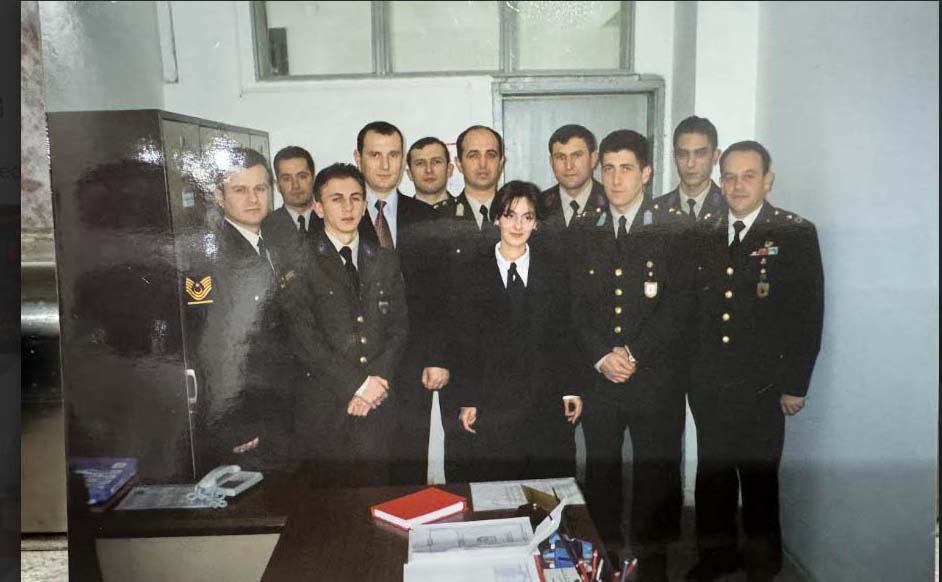 postgraduate degree while working as a Turkish language teacher at the Language Center of the Georgian National Defense Academy. I received this position on the recommendation of a colleague, for which I am still grateful.
At that time, an agreement had been signed between the governments of Georgia and Turkey, based on which Turkish officers were to train Georgian officers in accordance with NATO standards. For this military cooperation to be effective, it was necessary for the Turkish officers to know at least basic Georgian so they could issue orders in this language.
The Georgian language is still taught at the language school operated by the Turkish Ministry of Defense, alongside other languages. For years, Ersin Kaya (Arsena Makaradze), a descendant of Georgian Muhajirs, led this course. As cooperation deepened, it became necessary to involve a Georgian specialist, and I was chosen for the job.
Thus began my first work experience abroad. From 2002 to 2003, I taught Georgian to Turkish officers at the Istanbul Language School. From 2003 to 2004, I continued working in Ankara within the same program.
One particularly important stage for me was a research trip to Vilnius University in 2014. The trip was part of the International Research Staff Exchange Scheme (IRSES), an international project that shares experiences with Georgia and Moldova as they prepare for accession to the European Union. While in Vilnius, I studied the Karaites living there and their language policy.
In 2016, as part of the same program and in collaboration with Moldova State University, I had the opportunity to travel and study the Gagauz people. Notably, both the Karaites and the Gagauz are Turkic-speaking peoples, but non-Muslims, whose origin is still disputed. While in Moldova, I visited all the villages in the Gagauz Autonomous Region, interviewed respondents, and collected visual and linguistic materials. I later presented these materials at several international and local conferences. Since there are very few researchers working on this topic in Georgia, I consider my research in this area to be particularly important.
This material helped me develop a more academically sound syllabus for the master's course “History of the Turkish Language”, which I am still refining.
From 2016 to 2017, I had a unique opportunity to improve my qualifications at Ca’ Foscari University of Venice and thoroughly study the modern methodological basis of foreign language teaching - both theoretical and practical aspects - within the framework of the EU’s Erasmus Mundus project and with the support of Tbilisi State University. This knowledge helps me choose the right teaching methods, strategies, and learning approaches today.
Today, I believe that the path I took was about more than just academic progress. It also laid the groundwork for my professional identity and future research.
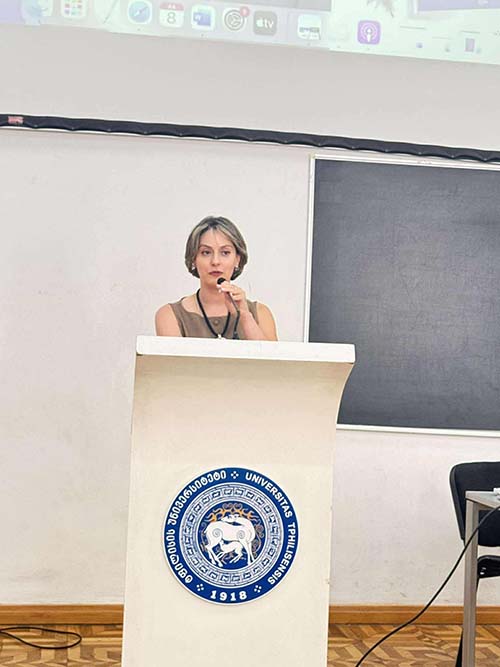 Since 2023, I have been an international authorization and accreditation expert for the Turkish Higher Education Quality Council (YÖKAK – Yükseköğretim Kalite Kurulu).
The Turkish Higher Education Quality Council (Yükseköğretim Kalite Kurulu – YÖKAK) was established in 2015. Since 2017, it has functioned as an institutionally independent and autonomous body with the mission of developing quality assurance, evaluation and accreditation processes in the Turkish higher education system in accordance with international standards. YÖKAK is currently affiliated with and actively cooperates with several leading international quality assurance organizations, including the European Association for Quality Assurance in Higher Education (ENQA), the European Quality Assurance Register for Higher Education (EQAR), the Asia-Pacific Quality Network (APQN), the Council for Higher Education Accreditation (CHEA), the International Network for Quality Assurance Agencies in Higher Education (INQAAHE), and the International Quality Assurance (IQA).
With my direct involvement, two Turkish universities have already received international accreditation. This was a valuable opportunity for me in terms of developing professional skills, deepening strategic and analytical thinking and improving qualifications. Working at YÖKAK has provided me with a unique opportunity to conduct systematic evaluations, deepen my research skills and introduce innovative approaches. Each experience is a creative challenge that strengthens my professional capabilities.
As far as I know, I am the only Georgian member of the Turkish Higher Education Quality Council who has international expert status.
Summer camps as a means of deepening knowledge
The initiatives implemented in 2024–2025 were particularly important for the development of Georgian Turkology as they contributed to the teaching of practical Turkish and the deepening of cultural and educational cooperation.
The first summer camp in the history of Georgian Turkology was held on July 21–27, 2024, in Mestia, Svaneti. Organized under the auspices of the Department of Turkology at Tbilisi State University, the program combined both educational and cultural components. The camp’s main objective was to enhance students’ practical Turkish language skills and introduce them to the nuances of Turkish culture, history and ethnography.
During the five-day course, participants listened to lectures by Georgian and Turkish professors, participated in seminars, attended a short film festival, and learned about the cultural heritage and local rituals of Svaneti. They also participated in culinary activities focusing on Svan and Turkish cuisines. The project received significant feedback, motivating us to expand it the following year.
In 2025, the Dialogue of Cultures camp was held in Lagodekhi with students from the Turkology department at TSU and the Georgian Language and Literature department at Recep Tayyip Erdogan University participating. The project exceeded expectations, becoming not only educational but also a space for friendly, cooperative, and intercultural experiences.
I would like to focus especially on the first online seminar “Georgian Turkology: Past, Present, Future,” which took place in 2021 amid the Covid pandemic. The seminar was a collaboration between the TSU Turkology Department and the Education Advisors of the Turkish Embassy. Approximately 60 Georgian Turkologists participated in the seminar. Modern challenges, strategic directions, and prospects for future cooperation were discussed with leading specialists in the field. The needs identified at this seminar became the basis for subsequent projects, including summer camps and a scientific collection.
In 2014, I co-authored a Turkish language textbook with my colleague, Teona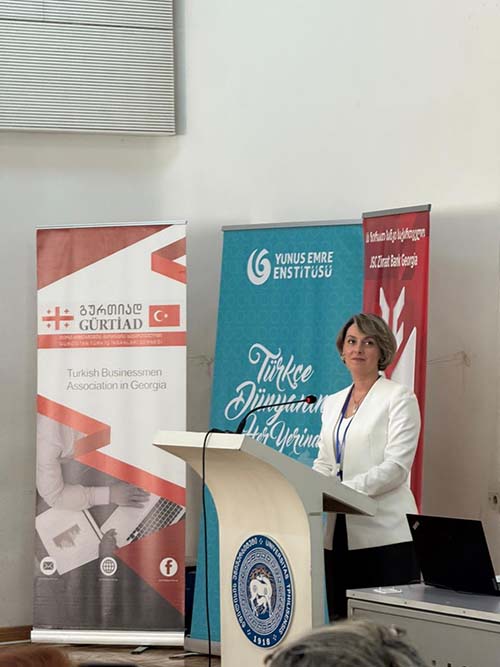 Apkhazava. The book is fully consistent with the Common European Framework of Reference for Languages (CEFR) requirements and covers levels A1–A2. It is designed for anyone interested in learning Turkish, especially beginners and those at the basic level.
The work is based on the rich, long-standing tradition of the Georgian Turkology School. It follows high-quality chrestomathies, reading books, and textbooks created by the luminaries in this field. These materials lay an important foundation for modern research and teaching. In addition, this textbook differs from its predecessors in that it takes a modern methodological approach, the main goal of which is to develop all four basic Turkish language competencies - reading, writing, listening, and speaking - equally and systematically.
Structurally, the textbook consists of four interconnected components: the main textbook, a workbook, audio material (CD) and a dictionary. This ensures an integrated and consistent organization of the learning process.
Notably, the texts and exercises in the textbook are based on the principles of intercultural communication. This allows Georgian language learners to become familiar with Turkish cultural realities from the beginning and, at the same, enables them to discuss the culture and attractions of their own country at an appropriate language level.
The first trilingual (Georgian-Turkish-English) scientific collection, Georgian Turkology Studies, is now available online. This is important because it allows us to reach a wider audience. The first issue was published in Istanbul by the Fenomen & RumeliYA publishing house, and subsequent issues have been published by the TSU publishing house. The collection provides young Georgian Turkologists with an opportunity to present their research to both the Georgian community and the international scientific community. It also introduces the public to the nearly century-long history of Georgian Turkology and the scientists whose work has significantly influenced Georgian-Turkish cultural and educational relations.
Of particular importance was the 1st International Symposium, which took place on November 14-16, 2025. Despite the centuries-old tradition of Georgian Turkology, this was the first time the symposium had been held. Dedicated to the 100th anniversary of Professor Nodar Janashia, the symposium was attended by Turkologists from Georgia and abroad. Representatives of leading academic centers in Turkey attended the event as guests of honor, including distinguished professors from the Chamber of Turkish Languages, Marmara University, and Eskisehir Osmangazi University. Without any humility, it can be said that it was a celebration of science.
Finally, the interdisciplinary international projects implemented in 2021–2022 with the participation of TSU, Ilia State University, and the University of Aveiro (Portugal) (“Sustainability – Best Practices from Georgia and Portugal”, “Wine – The Exchange of Cultural Experience”) were a unique experience for students and mentors alike. These projects received the highest evaluations and once again brought TSU into the European academic arena. Notably, the program provided an opportunity to develop a comparative understanding of Turkish language and culture, as well as innovative business initiatives. Ultimately, this student project was named the best winning project of the year.
Thus, the projects implemented in the field of Turkology in recent years clearly demonstrate that Georgian Turkology not only preserves a centuries-old tradition, but also creates a completely new, modern, multifaceted and innovative model in education and cultural diplomacy.
A language spoken by 180 million people
In today’s job market, it is important to choose a career that aligns with your interests and offers real employment opportunities. Languages and linguistic studies, particularly Turkology, are a great option for those interested in linguistics, history, culture and intercultural relations. Turkology involves studying language and the cultural, historical and social contexts associated with it. Studying this field gives young people a unique opportunity to familiarize themselves with new countries and cultures, develop analytical, critical and communication skills, and establish international connections. This is especially important in today’s professional environment.
 The Turkic language family consists of about 40 related languages. Today, approximately 180 million people speak this language. This number underscores the practical importance of Turkology and the professional value of studying it. Specializing in this field not only satisfies intellectual curiosity but also contributes to the career development of young people and increases their employability in the modern job market.
I would like to share with you a case I often discuss with my phonetics students to help them understand the importance of vowels in the Turkish language. In Turkish, vowels have distinctive meanings within words, so mispronouncing them can change the meaning of a word. For example, the difference between the hard “O” and the soft “Ö” can alter the meaning of a sentence entirely: Baba oldum (baba oldoom) means “I became a father”, while Babam öldü (babam øldy) means “My father died”.
While in Turkey, a Georgian student, who was requesting permission to return to Georgia due to his father’s death, could not pronounce the soft “Ö” and pronounced the hard “O” instead. As a result, the dean misunderstood the phrase as “I became a father” and sincerely congratulated the student. The surprised student repeated the phrase several more times, and the dean reacted the same way each time. In the end, everything became clear and the dean expressed his condolences. At first, though, it was undoubtedly a comical situation.
I often cite this case as an example of how a small phonetic error can completely change the meaning of a sentence, particularly in languages where vowels serve distinct functions. This also shows that phonetic inaccuracy can create a comical situation.
Future plans
I plan to continue and improve the projects I have started. This includes organizing a summer camp and providing scientific referencing for the Georgian Turkology Studies collection. It is important to me that Georgian Turkology becomes a modern, international and competitive academic field that preserves its historical tradition while creating new scientific and educational opportunities. With this goal in mind, I plan to explore new topics in Turkish-Georgian intercultural studies. My future work will focus not only on preserving what exists, but also on advancing Georgian Turkology in terms of both academic and international research.